Can I Plant Shrubs in Fall? —
When Is It Too Late in the Upstate?
This time of year we hear the same thing from almost every homeowner we meet: "I figured I'd missed it and should wait for spring."
It's an easy assumption. The leaves are coming down, the mornings are cold, and every garden center sign you saw in April made it feel like planting season ends when summer does. But in the Upstate it works the other way around. The weeks most people give up on are the weeks a new shrub gets its best start.
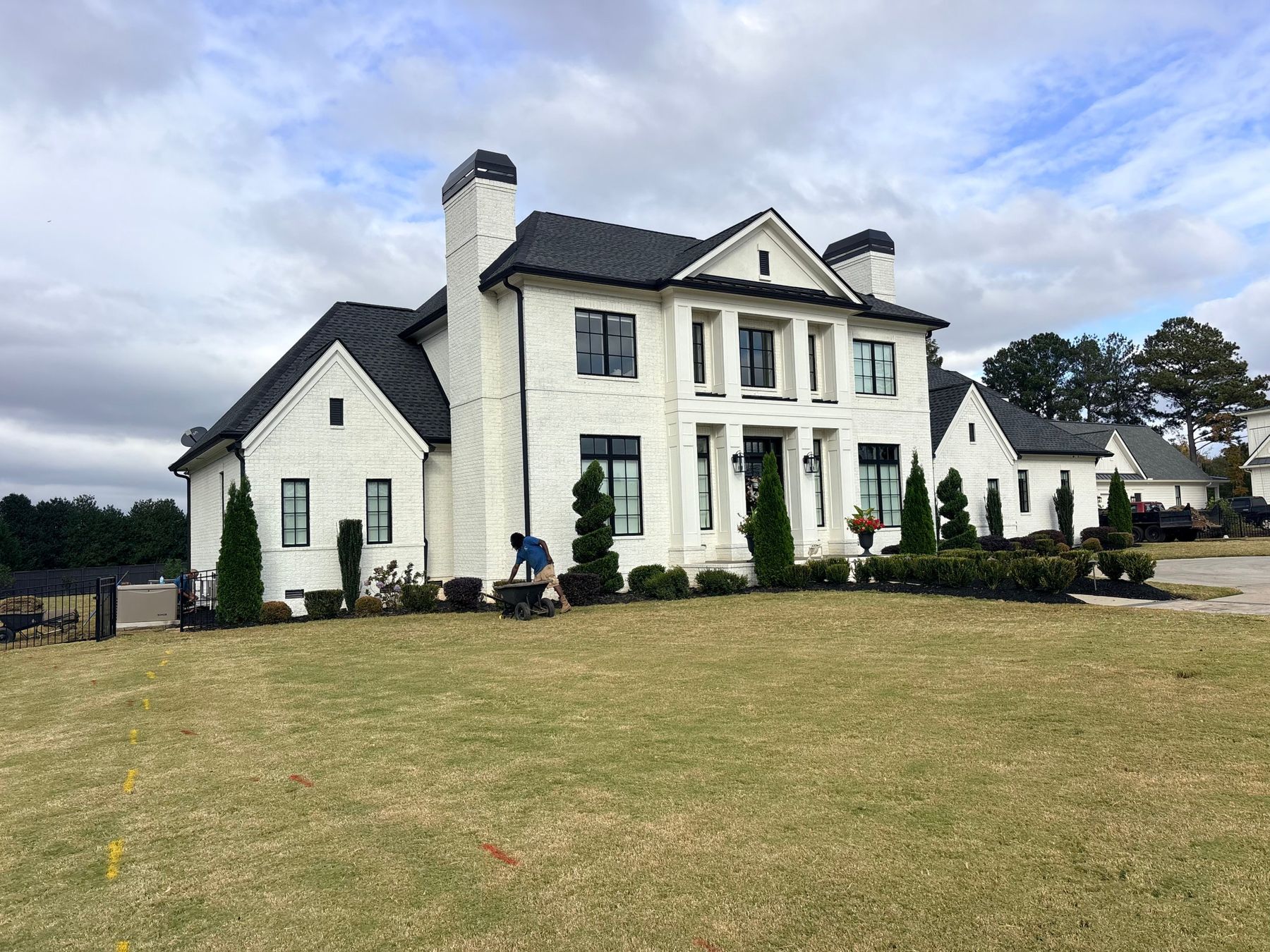
Why fall beats spring here
Clemson Extension doesn't hedge on this one. Its Home & Garden Information Center states plainly that "Fall is the best time to plant woody ornamental shrubs and trees" (Clemson HGIC).
The reason is simple once you see it. In fall, the top of the shrub is slowing down, but the soil is still warm from summer. The plant stops spending energy on new leaves and puts it into roots instead. And because South Carolina soil generally doesn't freeze in winter, those roots keep working long after the air turns cold — so a shrub planted in fall goes into spring already established (Clemson HGIC 1052, Planting Shrubs Correctly).
Plant that same shrub in May and it has a few weeks to root before it meets an Upstate July — with a small root ball and a lot of leaves pulling water out of it. That's the shrub people end up watering every evening all summer and still losing.
So when is it actually too late?
Not when the first frost hits. Frost is about the air. Root growth is about the soil — and the soil lags weeks behind.
The number to know is 40°F. Georgia horticulturist Walter Reeves, citing Cornell University research, puts the cut-off for new root growth at a soil temperature of about 40°F (Walter Reeves, Fall Planting — When Is Too Late). When he checked soil records at four inches deep for the North Georgia piedmont — Duluth, Alpharetta, Gainesville, the same red-clay foothill country we work in — the soil didn't cool to that point until about December 1. He still recommends finishing by November 1 when you can, so roots get a real head start (Walter Reeves, Shrubbery — Planting). West Virginia University Extension adds that transplanted roots keep growing slowly even at 42 to 45°F (WVU Extension).
Now line that up with our air temperatures. At Greenville–Spartanburg Airport, the median date of the first 32°F freeze is November 4, and the first hard 28°F freeze is November 22 (SC State Climatology Office). Those are frost dates, not root dates. The ground under a shrub bed is still well above 40°F for weeks after them.
Frost is about the air. Root growth is about the soil — and the soil runs weeks behind.
Iron Lungs Grading & Landscape ConstructionWhat that gives you in the Upstate:
← Swipe to see all columns
| Month | Hardy shrubs | Borderline-hardy shrubs | What the job takes |
|---|---|---|---|
| September | Prime | Good | Still hot early — water closely |
| October | Prime | Early in the month only | The best all-around month |
| November | Prime | Wait for spring | Aim to finish by mid-month |
| Early December | Workable | Wait for spring | Roots slowing; they finish in spring |
| Mid-Dec – Feb | Only if needed | Wait for spring | Never into frozen or soaked clay |
| March – April | Good | Prime | Plant early, before the heat |
Our field windows for Greenville, Spartanburg, Anderson, and Pickens counties, built on the extension and climate sources cited here. Higher elevations toward the North Carolina line run about a week or two earlier.
One honest caveat about late planting: a shrub that goes in during December isn't dead weight — but it's mostly sitting until the soil warms in March. That's still a head start over buying it in May. It just isn't the full fall advantage.
The shrubs that should wait for spring
Fall planting isn't a blanket rule, and this is where a lot of Upstate yards go wrong. Some of the most popular foundation shrubs around here are only barely hardy in our winters, and a few of them hate sitting in cold, wet clay before their roots are established.
Horticulturist Andy Pulte, writing for Fine Gardening, lists plants Southeastern gardeners are better off putting in during spring, including loropetalum, gardenia, Indian hawthorn, distylium, tea olive, camellia, and crape myrtle. His reasoning: plants near the edge of their cold tolerance do better with a longer stretch to establish before winter, and our fall weather is often wet (Fine Gardening).
That doesn't mean a gardenia planted in late September is doomed. It means the later in fall you get, the more those particular shrubs favor waiting. Hollies, boxwoods, junipers, arborvitae, viburnums, and most native shrubs don't share that problem — those are the ones to plant right now. If you're not sure which group a plant falls in, our plant catalog shows the shrubs we install, with their size and sun needs, and our guide to native, drought-tolerant plants for Greenville covers the natives that handle our clay best.
How to plant late so it actually takes
The later in the season you plant, the less room there is for mistakes. These come straight from Clemson's planting guidance (HGIC 1052) and NC State Extension (NC State, Beaufort County Center):
- Dig wide, not deep. Make the hole two to five times wider than the root ball, but no deeper. Set the ball on undisturbed soil so it doesn't sink.
- Keep the root flare at or above grade. In compacted or poorly drained clay, Clemson recommends setting the root ball 2 to 4 inches above the surrounding soil. Planting too deep is one of the most common ways shrubs die slowly.
- Fix circling roots before they go in the ground. Pot-bound roots left as-is can eventually girdle the stem.
- Mulch 2 to 3 inches deep — but pull it back a couple of inches from the stems. Mulch holds soil warmth and moisture, which is exactly what late roots need. (If you're weighing mulch against stone for your beds, we broke down the ten-year cost of river rock vs. mulch.)
- Skip the fertilizer. NC State Extension advises against fertilizing at planting, because it can burn tender new roots. Let the shrub spend this season on roots alone.
- Don't stop watering because it's cold. Water deeply at planting, every two to three days for the first two to three weeks unless it rains, then weekly through dry spells. In a dry winter, water every two to three weeks on a day above freezing. The goal is evenly moist, never soggy.
That last word matters in Upstate clay. A planting hole dug into heavy clay can act like a bathtub and hold water against the roots all winter. If your beds stay wet for days after a storm, that's a drainage problem to fix before you plant — here's what standing water after heavy rain is telling you.
The bottom line
If you're reading this in October or November, you haven't missed anything. You're in the best planting window of the year.
- Best: September through mid-November for hollies, boxwoods, junipers, viburnums, and natives
- Still worth it: through early December, as long as the ground isn't frozen or waterlogged
- Wait for March: loropetalum, gardenia, Indian hawthorn, tea olive, and other borderline-hardy shrubs
- Always: plant high in clay, mulch, skip the fertilizer, and keep watering through winter dry spells
Iron Lungs Grading & Landscape Construction designs and installs shrub beds, foundation plantings, and full landscape renovations across Greenville, Spartanburg, Anderson, Pickens, and the surrounding Upstate — and we fix the grade and drainage underneath first, so the plants aren't sitting in water. Tell us what you want to plant and we'll tell you straight whether it should go in now or wait for spring. Call or text (864) 238-4448.